06. The Builder's Manifesto and the Idasara Youth Vision
Final Message: "A country does not rise on politicians' promises or foreign aid. A country rises on proud young builders who create real value for the world with their own hands and their own minds. You are not a number in a job queue — you are the chief architect of our motherland's future."
1. "Don't Be a Coder — Be a Builder!"
As discussed in our Young Professionals track (Chapter 2, on the Product Engineer), there are two kinds of people in the world:
- The Passive Executor (the Coder): Does only what they are told, never digs for the root of the problem, waits for someone to hand them work.
- The Builder (the Product Engineer): Sees a pain in society or in people's lives and thinks: "How do I combine my knowledge with AI tools and build the solution?" — then independently builds it.
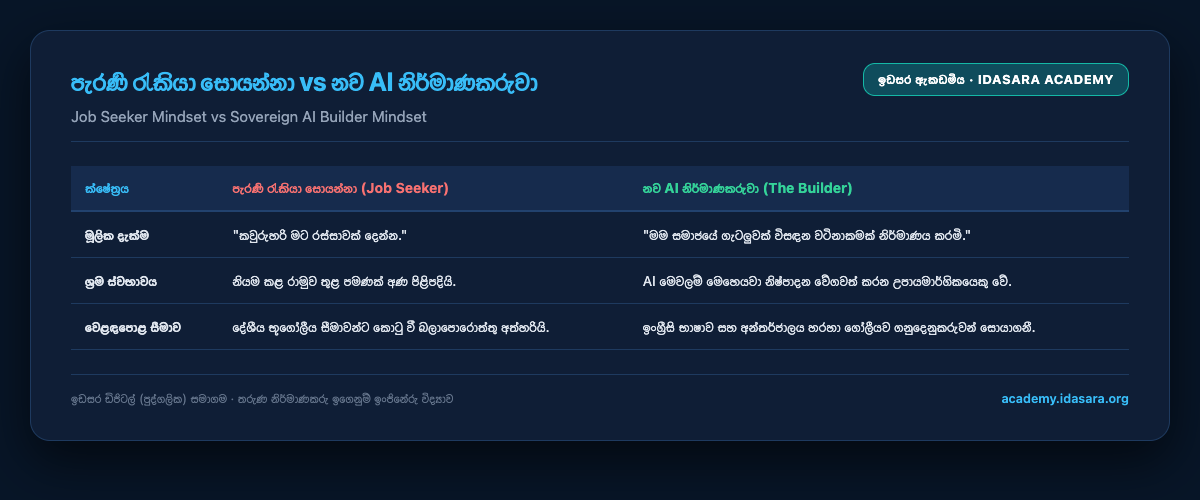 Figure 6.1: Job Seeker vs AI Builder — the two worlds of the queue-stander and the solution-builder.
Dinuka, Nethumi, Ravindu, Thilini, and Kavi — the five people you met across this book — are milestones on a single road: the journey from the helplessness of the job seeker to the dignity of the person who builds their own future. This is exactly how Idasara Academy defines employability:
Employability is the ability to gain, attain, retain, and change and enhance in a job.
A certificate is a piece of paper you receive once; employability is a capability that renews itself for a lifetime.
2. The Avukana Craftsmanship Standard
Think for a moment of the great master stonemason of the Anuradhapura era who carved the Avukana Buddha statue.
- He had no power tools, no modern machinery.
- In his hands were a chisel, a mallet, and limitless devotion.
- Yet 1,500 years later, the whole world still stands in awe before the serene colossus he released from black rock. Why? Because he poured his entire soul into the work — uncompromised craftsmanship.
Today, AI can hand you a website, a logo, or a video in 5 seconds. But:
A machine can supply speed; only your human heart and discipline can supply soul.
Never sell slop to the world. Even your smallest digital task — finish it with the Avukana stonemason's discipline, at the highest standard, with moral honesty.
3. The Japanese "Three Faces" Philosophy
Ancient Japanese wisdom offers a striking lens for how a young person should build character — in private life and in business. The saying goes: "A person has three faces."
- The first face: the one you show the world, society, the workplace — your Instagram profile, your portfolio (the public persona).
- The second face: the one you show only family and closest friends (the personal self).
- The third face: the one you show no one — the true self, hidden in the heart for fear of judgment.
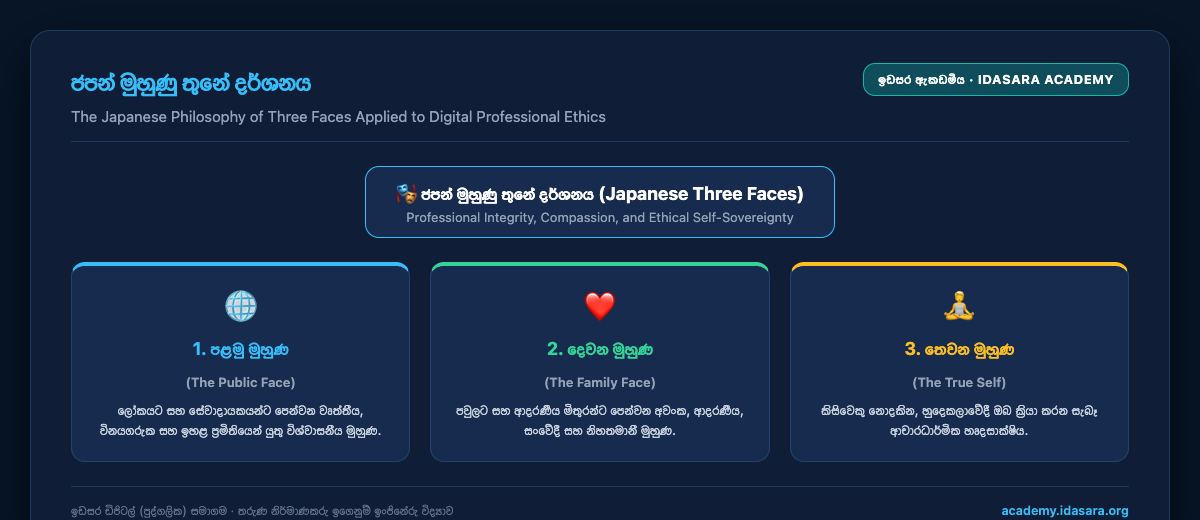 Figure 6.2: The Three Faces of a Person — the Japanese concept, transposed to the age of AI.
Figure 6.2: The Third Face's Challenge in the AI Age
Global research reveals a startling truth: the #1 use of AI conversation worldwide is now therapy and companionship. People open their third face — the fears, shames, and dreams they have told no human — to AI, precisely because AI never laughs and never judges.
The young builder must take two lessons from this:
- The strength: In English practice, in learning a new skill, in shaping a business plan — use this shame-free rehearsal space to your advantage. It is exactly how Thilini beat her Zoom fear.
- The danger: But the day AI becomes your only friend, you have begun fleeing human relationships. AI is a mirror that always agrees with you, always praises you — it will never tell you, as a real friend would, "No, machan, that's wrong." Make the machine your practice partner; never make it your world.
And when no one is watching — alone in your room, in front of the screen — not stealing, not copying others' work, staying honest with yourself: that is the true strength of your third face.
4. The Five Golden Rules of the AI-Native Youth
By now you can see that every chapter of this book was woven around one principle. Together they form the living constitution of the young builder in the AI age, condensed in Figure 6.3 — learn and build daily; inspect with your own eyes before publishing; create value instead of selling hours; hold the Avukana standard; keep the third face honest:
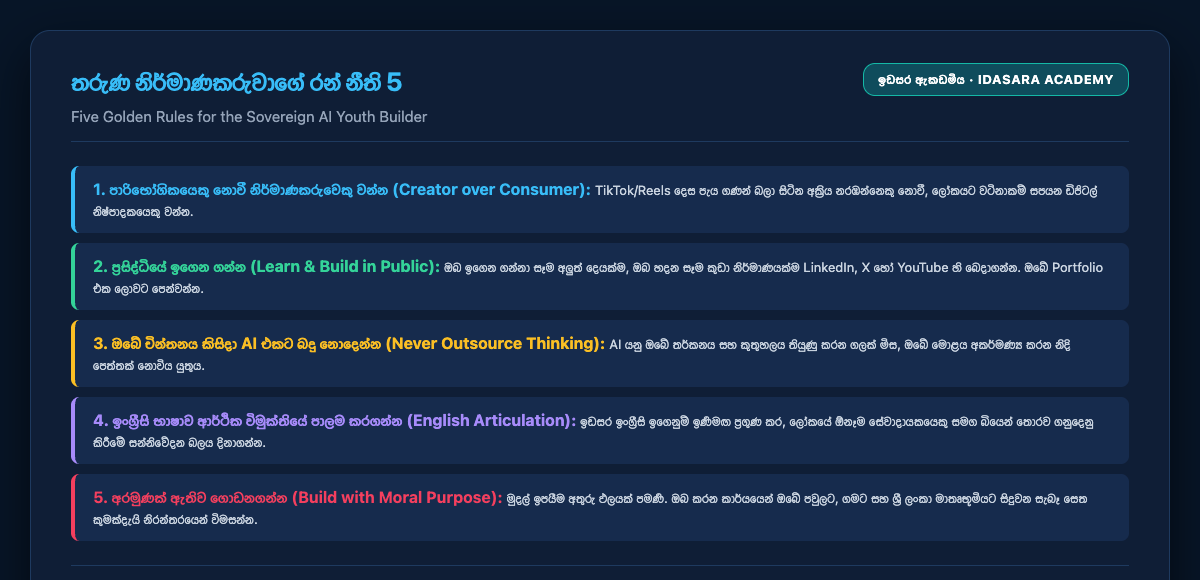 Figure 6.3: The Youth Builder's Five Golden Rules — the daily constitution of the young creator.
Important
Reading golden rules achieves nothing — living them does. Print this page and stick it above your desk. At the end of every week, ask yourself: "What did I learn this week? What did I build? What did I publish?" — a week with no answer to all three is a week lost.
5. Your Road Ahead with Idasara Academy
Idasara Academy stands permanently committed to your entrepreneurial and digital journey:
- 🌐 The official Idasara Academy website: https://academy.idasara.org/ Free e-books, mentoring, and modern AI courses.
- 🪜 The Idasara English Learn Ladder: https://academy.idasara.org/english-learn-ladder/ The landmark learning framework built to carry Sinhala-medium youth to global communication.
- 🧠 The Learn to Learn Framework: The scientific method for self-mastering any new technology in a few weeks.
 Figure 6.4: QR code to Idasara Academy's free youth educational resources and digital learning portal (academy.idasara.org)
6. The Final Address: Rise — the World Is Waiting for You!
"To live like a lion, you must stop bleating like a sheep!"
Dear young friend,
You were not born by accident. To be young in the era of this historic AI revolution is an extraordinary stroke of fortune.
The power that once belonged only to kings and the wealthy — the power to spread knowledge across the world, to build institutions, to change human lives — now sits inside the smartphone in your pocket!
- Stop complaining.
- Stop making excuses.
- Start your first digital creation today.
The future does not belong to those who wait. The future belongs to the builders who create it.