02. The AI Creator Economy: Producing Images, Audio, Video, and Content
Published 2026-09-14
Core Theme: "In the last era, producing a film, an advertisement, or a song required millions in studio equipment and a large crew. Today, one young person can run a complete Hollywood-grade creative studio from a laptop in their bedroom, powered by AI tools. This is the golden age of the Creator Economy."
What barrier just disappeared?
A young person who wanted a creative career used to need three things: an innate talent for drawing, expensive cameras and editing equipment, and a way past the gatekeepers — newspapers, TV channels, ad agencies.
Generative AI removed all three, and it is worth being precise about how.
Language became the camera. If you can describe the scene in your head clearly, a model produces a high-grade image or video in seconds. The skill that used to be manual — drawing, lighting, framing — has become linguistic, which means the barrier is now articulation rather than equipment or natural talent.
And one person became a studio. You take the role of creative director conducting every function: writer, illustrator, voice artist, music director, editor.
| Resource | The Old Studio Era | The AI Creator Era |
|---|---|---|
| Equipment | Cameras, lights, editing suite — Rs. 2,000,000+ | Smartphone + AI tools — from Rs. 0 |
| Crew | A production team of at least 5–10 people | You + your AI staff |
| Production time per reel | 2–3 days | 45–90 minutes |
| Gatekeeper | Channel directors, ad agencies | Nobody — you are the publisher |
The last row is the one that changes a life rather than a workflow. When gatekeepers decided what got published, talent was necessary but insufficient — someone had to select you. That permission step is gone, which means the remaining constraint is entirely your own consistency.
Nethumi's story: from a Matara kitchen to the world
Nethumi, 22, from Matara, had no video production experience. What she had was a set of pickle recipes inherited from her mother, and an old Android phone. Early on, one reel cost her six hours: shooting, cutting, typing subtitles, hunting for music.
After learning the AI production pipeline her arithmetic changed — script in ten minutes, subtitles automatic, edit plan in thirty. Where she made one reel a week, she now makes five. Within three months and forty reels she signed her first brand deal: a four-reel package for a spice company at Rs. 25,000.
Note what actually produced that result. Her recipes did not improve and her storytelling did not change. Her output rate multiplied by five, and the platform rewarded it. In the creator economy, consistent output beats talent — because the algorithm cannot distribute the reel you did not make.
The four media layers to master
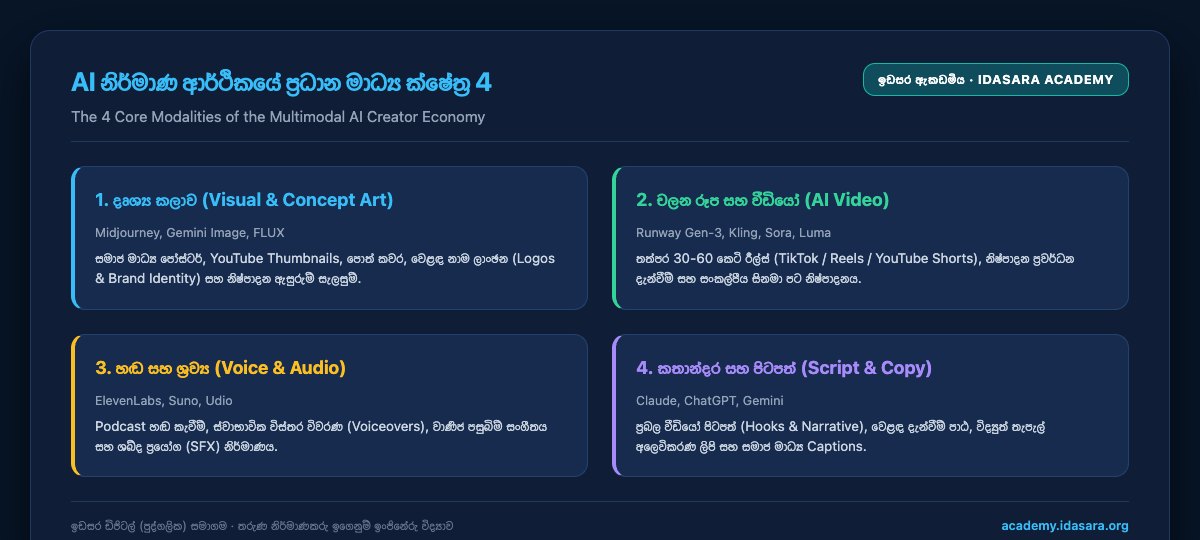 Figure 2.1: The Multimodal Creator Quadrants — the 4 media domains the modern creator conducts simultaneously.
Images and digital art — commercial-grade photographs, posters, brand logos and product shots. The real skill here is not the software; it is painting the scene in words: camera angle, lighting, mood and colour palette, stated precisely. Which is to say the skill is writing, again.
Audio and voice — turning scripts into narration, producing podcasts, generating background music. This layer removes a specific and very Sri Lankan obstacle: the young person who avoided the microphone because of a village accent. The script is yours; the voice production is the machine's.
Video — the complete short-form production chain, from screenplay to generated scenes, subtitles and edit plan.
Text and content — social posts, blog articles, newsletters and sales copy. Listed last and underpinning all the others, because every one of the first three begins with a written idea.
Tip
Start with one quadrant. Trying to master all 4 layers at once — and therefore doing nothing — is the new creator's most common mistake. Use Chapter 01's 4-week framework to master one layer, earn your first income from it, then move to the second.
Producing a reel in 45 minutes
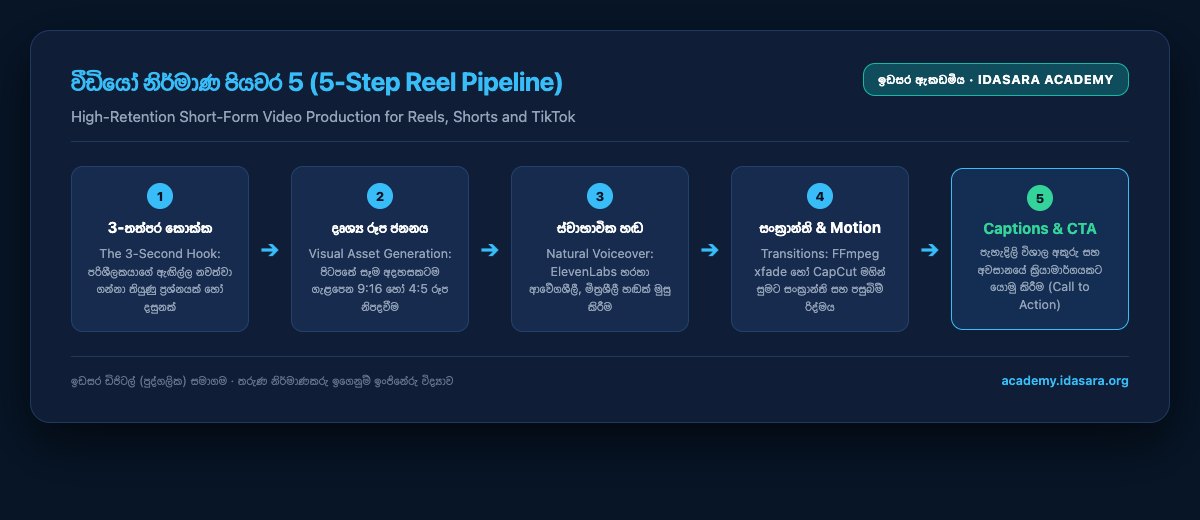 Figure 2.2: The Five-Step Reel Pipeline — the AI-assisted production chain from idea to publication.
The hook script. A question, surprise or pain point that stops the viewer within three seconds. Draft five or six versions with AI and pick the strongest — the drafting is cheap, and the first version is rarely the best.
The visual plan. For every sentence, the matching visual: your own footage, generated imagery, or a screen recording. Planning this before production is what prevents the six-hour edit.
Voice and music. Clear narration, recorded or generated, with background music matched to the rhythm.
Edit and captions. Auto-generated subtitles synced to the voice. This is not optional: most reels are watched on mute, so a reel without captions is a reel most viewers cannot follow.
Publish and analyse. Post at the right time, then examine retention percentage and shares — and use them to improve the next one. This final step is what separates a creator who improves from one who simply accumulates posts.
Two blueprints to copy
💬 Hook Script Prompt: "I'm making a 45-second Instagram Reel for young people about 'time management and the dopamine trap.' Write a script with: a powerful hook that stops anyone from scrolling within the first 3 seconds, 3 sentences that make the problem vivid, a practical solution, and a final CTA. Constraints: maximum 12 words per sentence. Write in natural spoken language, not textbook prose. Do not promise false or exaggerated benefits."
Three constraints in that prompt matter. Twelve words per sentence, because spoken language on video has to be short. Natural spoken language rather than textbook prose, because written-sounding narration is instantly recognisable as inauthentic. And no false or exaggerated benefits — which is an ethical rule that happens also to be a commercial one.
💬 AI Image Prompt (for image generation): "Cinematic vertical 9:16 photograph: a young Sri Lankan student at a cluttered desk at night, phone glowing with endless social feed, textbooks unopened, warm lamp light, shallow depth of field, documentary realism, no text on image." (Writing image prompts in precise English yields more accurate results — which is itself practice for the English Learn Ladder coming in Chapter 04!)
Study the vocabulary in that image prompt: vertical 9:16, shallow depth of field, documentary realism, warm lamp light, no text on image. That is the language of cinematography, used as instruction — and it is why the earlier point about writing rather than software holds. The person who can name what they want gets it.
Four ways to actually earn from this
Most people producing AI content never earn anything, and the reason is not quality. It is the absence of a business model.
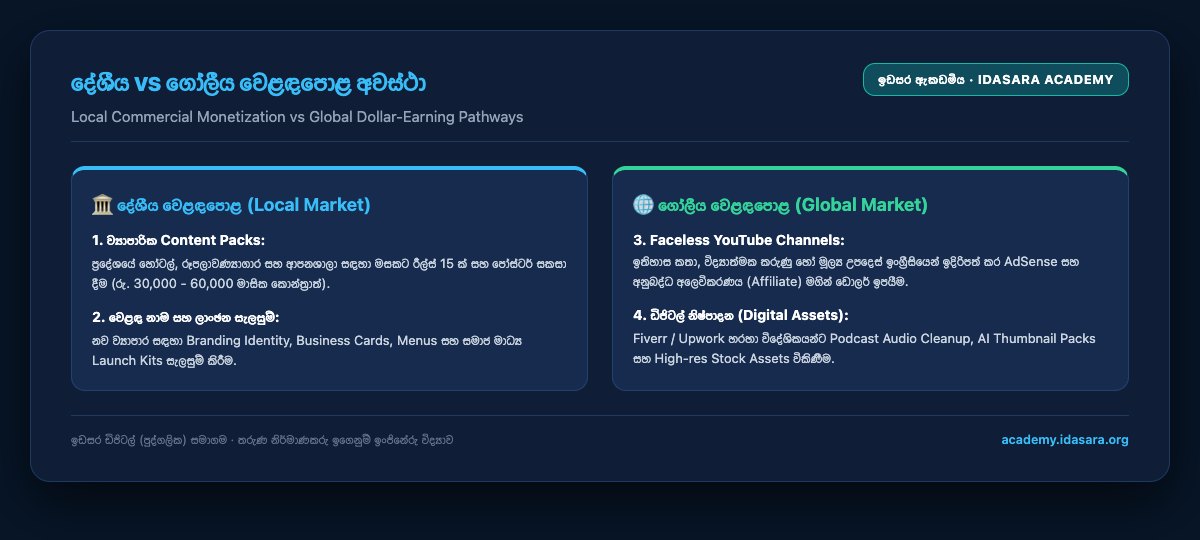 Figure 2.3: Local vs Global Monetization — the creator's income ladder from rupee earnings to dollar earnings.
Content services for local businesses is the first rung. Every salon, hotel, restaurant and tuition class in your town needs social media content, and almost none of them know how to produce it. A monthly package of four reels sells locally for Rs. 15,000–40,000. Unglamorous, immediate, and it teaches you to work to a client's deadline.
Platform revenue — advertising income from YouTube and similar — is a long-term yield that arrives only after an audience exists. It should not be the goal of your first months, and treating it as one is why many creators quit before earning anything.
Digital products are where the economics change. Package what you have mastered — presets, templates, guides — build once, and sell globally an unlimited number of times in dollars. Your income stops being bounded by your hours.
Global brand and client retainers are the top rung: ongoing monthly content contracts with foreign companies at $300–$2,000 a month. Chapters 3 and 4 describe the bridge to them.
Important
First the rupee, then the dollar. Too many young creators dream of the global market on day one while failing to see the 10 local opportunities next door. Without the experience, portfolio, and testimonials that come from working with a local client, the door to the global market does not open.
The ladder is sequential for a practical reason rather than a moral one: a foreign client asks for evidence and references, and the local work is where both are manufactured.
Do not manufacture AI slop
The internet is filling with meaningless, plastic AI video and imagery — AI slop — and the creators producing it are earning nothing.
Put human storytelling first. AI is the canvas and the paint; the soul of the work is your own vision. Nethumi's reels succeeded because of the truth in her mother's achcharu recipes, not because of the tools. The tools only let her tell it five times as often.
Never build deepfakes or disinformation. Do not mislead people for money.
Finish your work properly. Before releasing anything, inspect it yourself — the colours, the type, the edit — and present it at the highest standard you can reach. This craftsmanship is the visible difference between a creator and a content mill.
Warning
Platform algorithms can smell slop. Instagram, YouTube, and TikTok now systematically suppress low-quality AI content with no human touch. Channels that chased a short-term trick have vanished overnight. Moreover, presenting an AI-generated person as real, or fabricating a deepfake showing someone doing what they never did, is fatal to your brand — and legally dangerous. There are no shortcuts — only journeys cut short.
In the next chapter, we examine how a single person can serve the world — and reach global dollar income — through the Freelance Micro-Agency and Solopreneurship model.